When adults think about math, we often picture children counting to 10 or even 100. But long before a child can recite numbers, they are developing the foundational skills that make counting meaningful.
Learning to count isn’t simply memorizing number words. At NurturEd, we use The Creative Curriculum to intentionally build foundational skills from infancy through preschool, making math meaningful through everyday play and exploration.
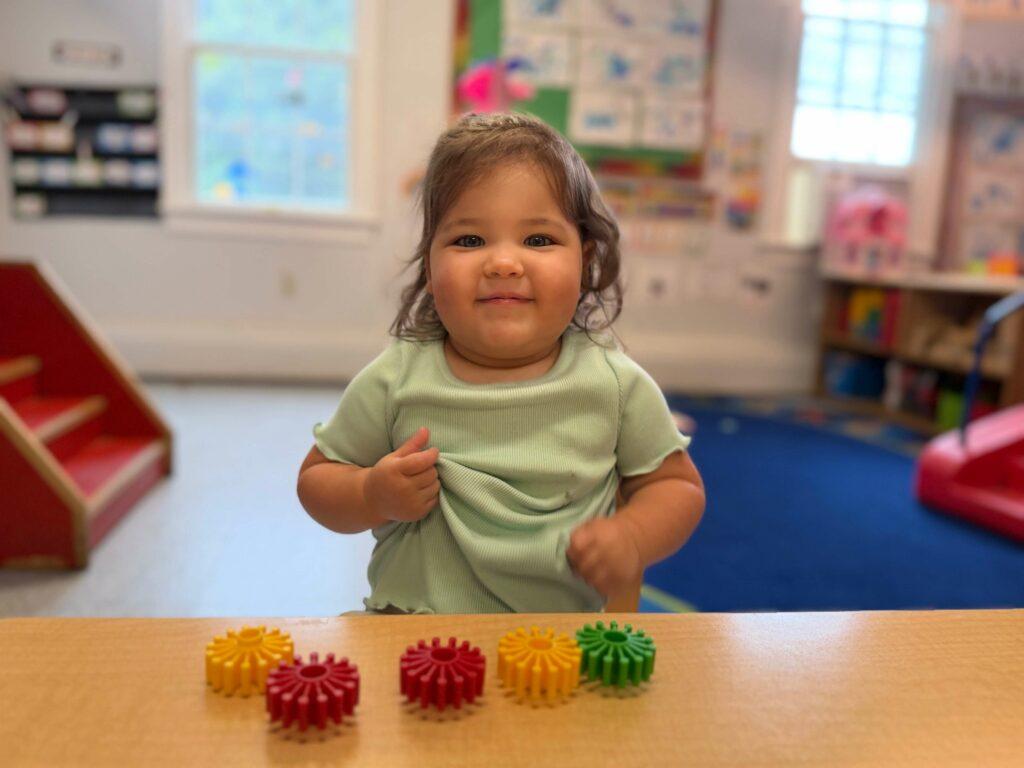
Children first need to understand that numbers represent real objects and that each object is counted only once. This important concept is called one-to-one correspondence – the understanding that each object is counted once and only once. This is an essential building block for learning what numbers truly mean.
Just as children learn to walk before they run, they build counting skills one step at a time.
Infants: Building Awareness Through Everyday Experiences (Birth–12 Months)
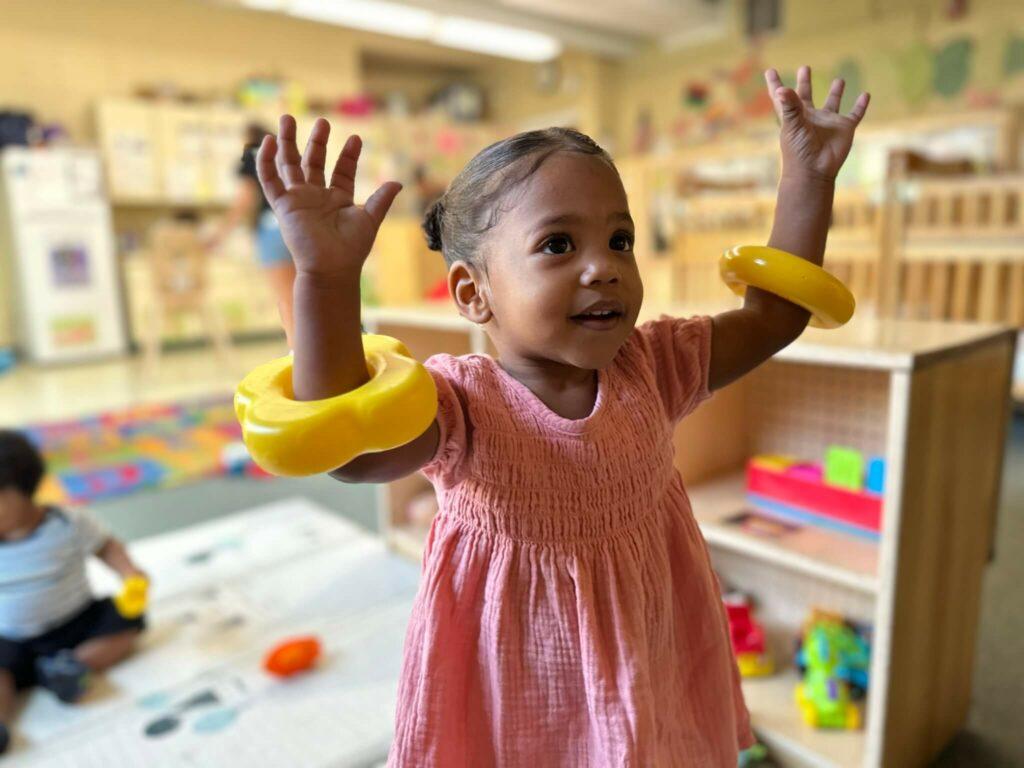
Even babies are developing early math skills! Infants begin to notice differences in quantity, patterns, and routines through everyday interactions.
You can support early math learning by:
- Singing counting songs and fingerplays.
- Talking about “one bottle,” “two socks,” or “three kisses.”
- Offering toys to hold, stack, or place into containers.
- Exploring patterns, shapes, and sizes during play.
While infants are not counting yet, they are beginning to recognize that the world is organized in ways that can be described and compared.
Toddlers: Exploring Quantity and Number Words (1–2 Years)
Toddlers love to imitate adults. They often begin saying number words long before they understand what those numbers mean.
During this stage, children learn to:
- Hear and repeat counting sequences.
- Match objects together.
- Sort items by color, size, or shape.
- Notice when there are “more” or “less.”
- Fill and empty containers while comparing amounts.
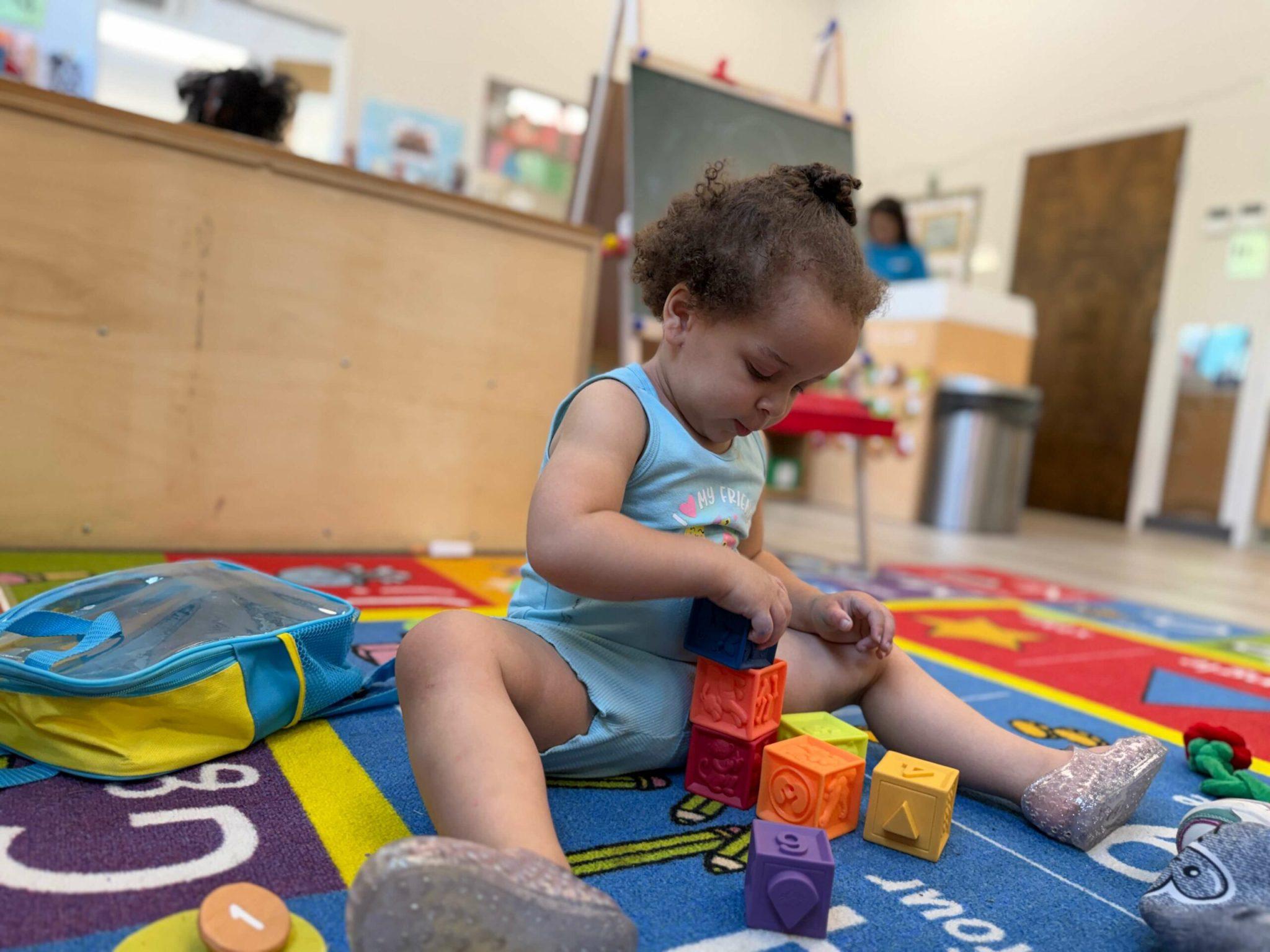
Simple activities like placing blocks into a bucket or handing out napkins at snack time help children connect numbers with real experiences.
Older Toddlers: Beginning One-to-One Correspondence (2–3 Years)
As children’s thinking grows, they begin connecting one number word to one object.
Instead of simply saying “one, two, three” while pointing randomly, they begin to understand that:
- Each object gets counted once.
- Touching or moving objects helps keep track.
- The last number counted tells how many there are altogether.
Teachers support this learning by encouraging children to:
- Count toy animals as they line them up.
- Pass out one cup for each friend.
- Count steps while climbing.
- Build towers with a specific number of blocks.
These hands-on experiences are much more valuable than memorizing numbers alone.
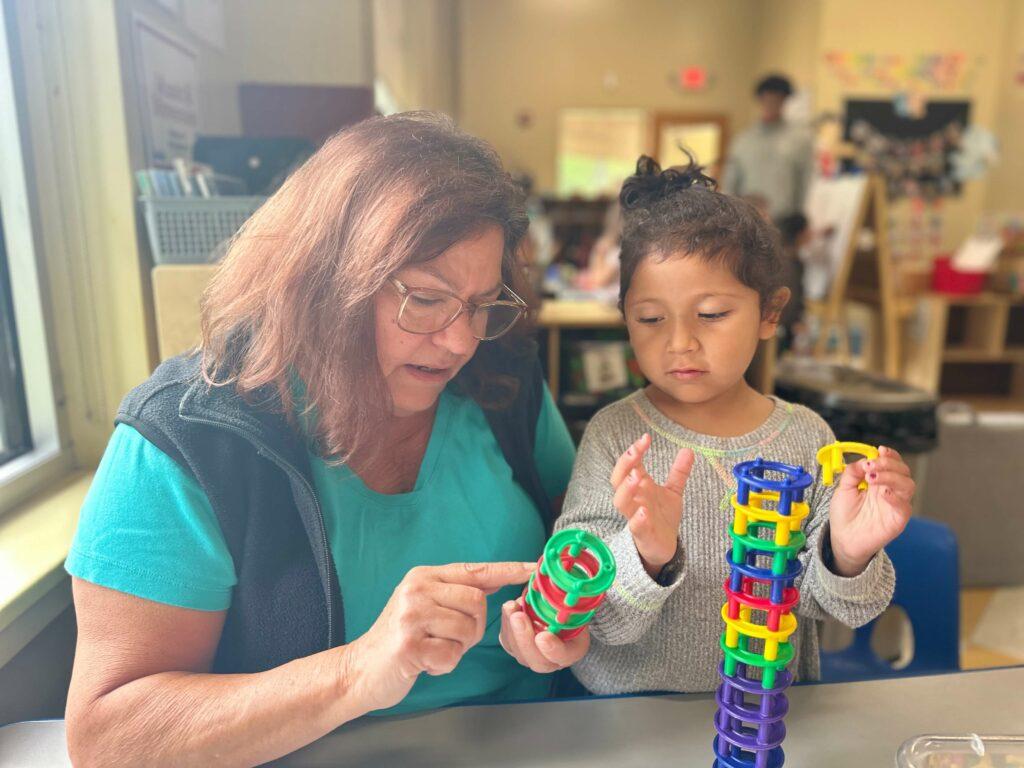
Preschoolers: Understanding What Numbers Mean (3–5 Years)
Preschoolers begin using counting with purpose. They are learning that numbers have meaning and can answer questions like “How many?”
Children practice:
- Counting objects accurately using one-to-one correspondence.
- Recognizing written numerals.
- Comparing which group has more or fewer items.
- Counting forward and backward.
- Solving simple everyday math problems.
Teachers create opportunities throughout the day by asking questions like:
- “Can you give everyone one paintbrush?”
- “How many children are at our table today?”
- “Let’s count how many apples we need for snack.”
- “Can you build a tower with six blocks?”
These experiences help children see that math is useful, meaningful, and part of everyday life.
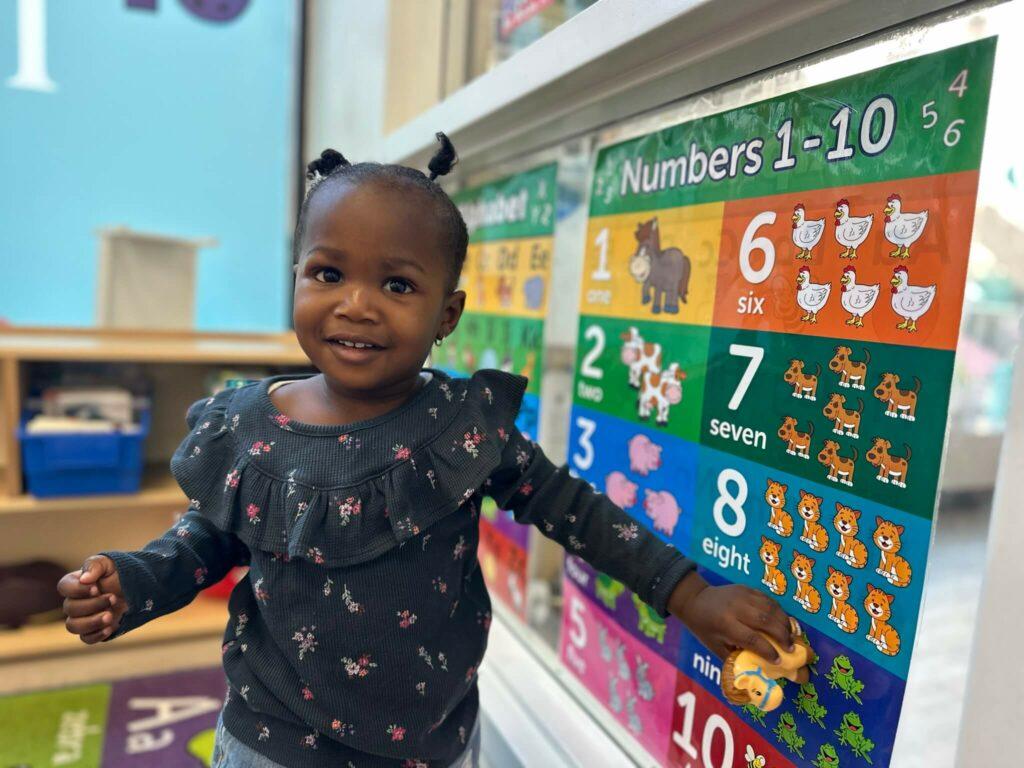
Why One-to-One Correspondence Matters
One-to-one correspondence is one of the strongest predictors of future math success. Before children can add, subtract, or solve problems, they need to understand that each object is counted once and only once.
When children master this skill, they begin to understand that:
- Numbers represent quantities.
- Counting has a purpose.
- The final number counted tells “how many.”
- Numbers can be used to compare groups and solve problems.
This understanding forms the foundation for all later math learning.
Math Is Everywhere
Young children learn best through play and everyday routines. Families can strengthen counting skills by making math part of daily life.
Try counting:
- Steps as you walk upstairs.
- Grapes at snack time.
- Books before bedtime.
- Toys during cleanup.
- Birds outside the window.
- Flowers in the garden.
There is no need for flashcards or worksheets. Conversations, games, songs, and playful experiences help children develop a strong mathematical foundation while keeping learning joyful.
Every time children count objects, sort toys, compare quantities, or solve simple problems, they are building confidence and developing the skills they will use throughout school and beyond. By supporting these experiences from infancy through preschool, we help children discover that math is all around them—and that learning can be fun every step of the way.